Different Nicotine Sensations Despite the Same Concentration – Why Is That? 🤔🧪💨
You probably know this: Your friend vapes a disposable with 2% nicotine and raves about the pleasant scratch in the throat and the relaxed feeling. You buy the same model, the same brand, the same concentration – but for you it feels completely different. Maybe it scratches too much, you have to cough, or it makes you dizzy. Or the opposite: for you it feels much too mild, almost like 0%. How can that be? It’s the same amount of nicotine, isn’t it? 😕
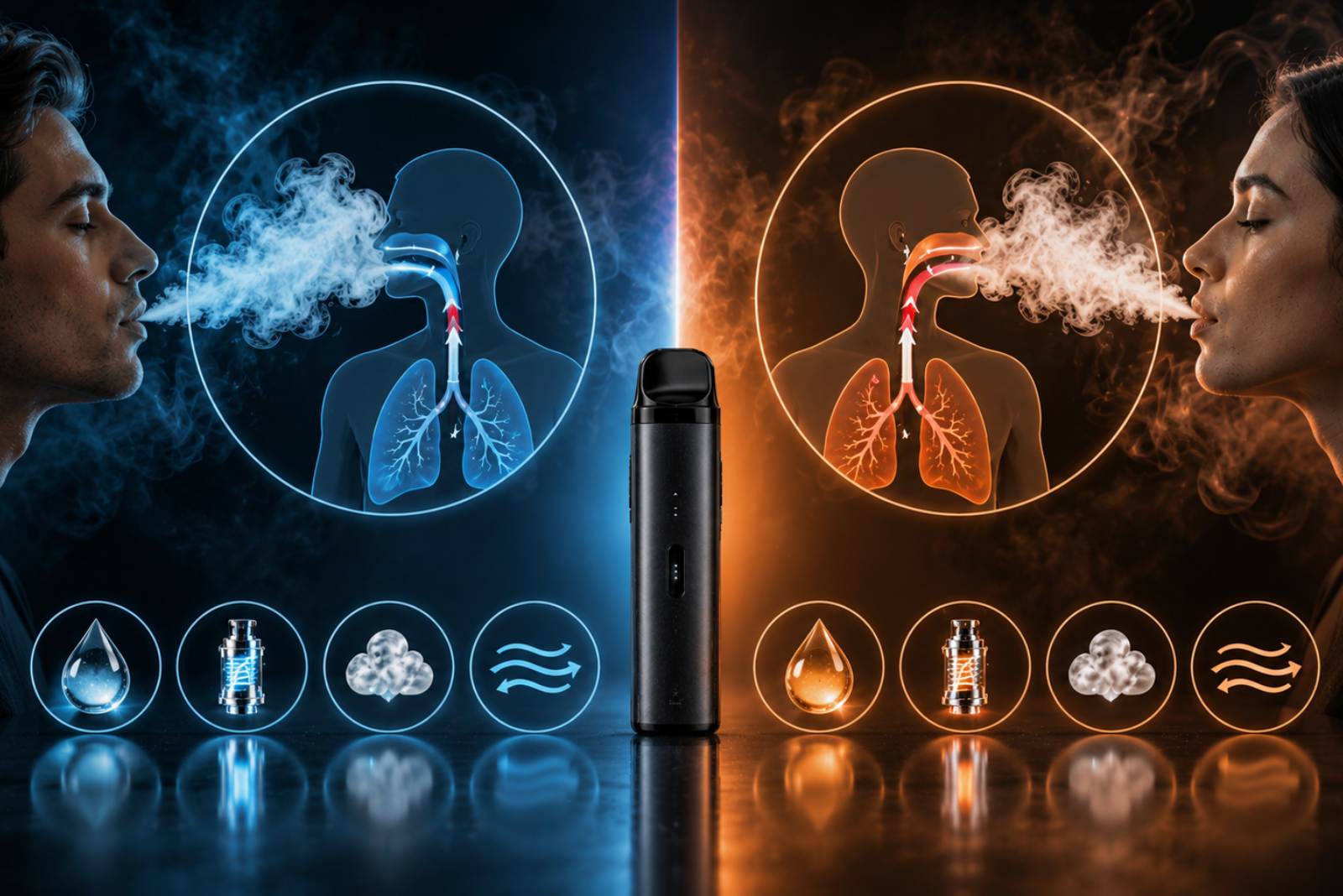
The answer is: Nicotine is not always the same. Two devices with exactly the same concentration (e.g., 20 mg/ml or 2%) can feel totally different. The reasons lie in the device’s technology, your personal drawing technique, the type of nicotine, and even your own body. And that’s completely normal.
In this article, we’ll explain simply why nicotine sensation can vary so much – even though the packaging shows the same number. You’ll learn which technical factors play a role, why your breathing habits matter, and how to find the right device for you. Because just because something feels right for your friend doesn’t mean it’s right for you. 😊
What Does “Nicotine Concentration” Actually Mean? A Brief Introduction 📊
Before we dive into the differences, let’s clarify what is meant by “nicotine concentration”. On your disposable vape you’ll find information like “2%” or “20 mg/ml”. That means: In one milliliter of liquid, 20 milligrams of nicotine are present. That’s the legally permitted maximum for pre-filled vapes in Germany and the EU.
There are also milder variants with 0.6% (6 mg/ml) or of course nicotine-free with 0%. These numbers are objective and measurable. So two different devices with 2% nicotine contain the same amount of nicotine per milliliter of liquid.
But your body doesn’t notice that. Because what actually reaches you depends on many other factors. The concentration is only half the truth.
Why the Same Nicotine Strength Can Feel Completely Different 🤯
Imagine you’re drinking a glass of wine. The bottle has 12% alcohol. But whether you enjoy the wine or barely feel it depends on how fast you drink, whether you’ve eaten before, how large the glass is, and how sensitive you generally are to alcohol. It’s similar with nicotine.
Nicotine sensation is made up of:
-
How much nicotine actually reaches your lungs per puff? (not just what’s in the liquid)
-
How quickly is it absorbed?
-
How sensitively does your body react to it?
These three factors are influenced by various technical and personal circumstances.
Technical Factors: The Invisible Adjusters ⚙️
The biggest reason for different nicotine sensations lies in the device itself. Here are the most important technical differences.
1. Vapor Volume Per Puff – The Decisive Volume 💨
This is by far the most important point. A vape that produces a lot of vapor delivers much more nicotine per puff – even if the concentration is the same.
A simple example:
-
Device A (MTL, small draw) produces 2 ml of vapor per puff. At 2% nicotine, that’s 0.04 mg of nicotine per puff.
-
Device B (DTL, large draw) produces 10 ml of vapor per puff. At 2% nicotine, that’s 0.2 mg of nicotine per puff – five times the amount.
You see: The device with the larger vapor production delivers a much stronger nicotine sensation, even though the liquid concentration is identical.
Therefore: A disposable vape with an open airflow (DTL-like) feels much more intense than one with a tight airflow (MTL), even with the same nicotine content.
2. The Temperature of the Heating Coil – Hotter Vapor, Stronger Effect 🔥
The temperature at which the liquid vaporizes affects how much nicotine is released. A hotter heating coil vaporizes the liquid more efficiently and can transfer more nicotine per unit volume into the vapor phase. That means: A device that operates at higher power (warmer vapor) can feel stronger in nicotine than a device that vapes cooler, even with the same concentration.
Some disposables are designed for higher temperatures by default (often those with mesh coils and powerful batteries). Others are tuned cooler.
3. The Airflow – Tight or Wide? 🌬️
The airflow affects how the vapor reaches your throat mucous membranes.
-
Tight airflow (MTL): The vapor is concentrated, hitting a small area more intensely. This can subjectively intensify the nicotine effect, even though objectively less vapor volume is present.
-
Wide airflow (DTL): The vapor spreads over a larger area, feels smoother, but due to the larger volume, more nicotine arrives overall.
Some perceive a tight draw as “stronger scratching”, others a wide draw as “more effect”. This is very individual.
4. Nicotine Salts vs. Freebase Nicotine – A Big Difference 🧪
Here it gets chemical, but don’t worry, we’ll keep it understandable. There are two main forms of nicotine in liquids:
-
Freebase nicotine: This is the pure, basic form. It scratches more in the throat (strong throat hit) and is absorbed slightly more slowly by the body. This used to be the standard.
-
Nicotine salts (Nic Salts): Here, the nicotine is combined with an acid (usually benzoic acid). This lowers the pH, making the vapor much smoother (almost no scratch), but the nicotine is absorbed faster and more efficiently into the blood. The effect kicks in quicker and feels “smoother”.
Most modern disposable vapes (especially the compact ones with high nicotine strengths) use nicotine salts. Why? Because they allow 2% nicotine to be used without unpleasant scratching. The vapor feels smooth, but the nicotine effect is there.
A device with freebase nicotine (rare in disposables, but in some older models or refill liquids) would feel much scratchier and “sharper” at the same concentration – even though the mg/ml are the same.
Important: In the EU, nicotine salts are permitted in pre-filled vapes as long as the concentration does not exceed 20 mg/ml. Most modern disposables at dezig.de use nicotine salts for a smoother but still effective experience.
5. Consistency of Power – Does the Vapor Volume Fluctuate? 📉
Cheap or technically inferior disposable vapes often have declining battery performance. The first puffs are strong, then the vapor becomes cooler, and nicotine delivery drops. With a high-quality device with consistent power, every puff is the same – including the nicotine sensation.
Personal Factors: Why You React Differently Than Your Friend 🧍
Not only the device matters, but also you yourself.
1. Individual Nicotine Tolerance 🧬
People react differently to nicotine. This is due to genetic factors (how quickly the liver breaks down nicotine), habituation (heavy users are less sensitive), and general physical condition. Two people can use the same device – one feels a strong kick, the other barely anything.
2. Drawing Technique and Breathing Habits 🫁
-
Draw duration: The longer you draw, the more vapor (and nicotine) reaches your lungs.
-
Draw strength: A stronger draw can produce more vapor (depending on the airflow).
-
Inhalation depth: Do you only draw the vapor into your mouth (and then exhale) or deep into your lungs? The latter leads to more nicotine absorption.
-
Pauses between puffs: Short pauses allow less time for the nicotine effect; long pauses increase sensitivity.
If your friend takes a long, deep draw and you only take a short, shallow one, you will experience the same device completely differently.
3. Physical Condition, Food, and Drink ☕
Your body is not a machine. After a large meal, nicotine absorption can be slower. After caffeine, you may react more sensitively. When you’re tired, nicotine often feels stronger. Whether you’ve smoked before also plays a role. These factors vary from day to day.
4. Expectation and Mental Attitude 🧠
Placebo effects also exist in vaping. If you expect a device to work strongly, you will likely perceive it that way. If you are skeptical, it may feel milder. Your head plays a big role.
MTL vs. DTL – The Classic Difference 📖
Because it’s so important, let’s highlight this point again separately. The drawing technique you use with the device is the single biggest factor for different nicotine sensations.
-
MTL (Mouth to Lung): First into the mouth, then into the lungs. Usually tighter airflow, lower vapor volume, but more concentrated vapor. At the same nicotine concentration, MTL often feels “scratchier”, but less nicotine per puff reaches the lungs overall. That’s why higher nicotine strengths (2%) are common with MTL.
-
DTL (Direct to Lung): Directly into the lungs. Wide airflow, large vapor volume, smoother vapor, but much more nicotine per puff. That’s why DTL vapers usually use low nicotine strengths (0% or at most 0.6%).
If you are used to an MTL device with 2% nicotine and then try a DTL-like device also with 2%, you will likely feel overwhelmed – even if the concentration is the same. That’s not a device flaw, but a mismatch between drawing style and nicotine strength.
Device Quality: Why Original Vapes Are More Consistent 🏆
Another reason for different nicotine sensations is device quality. Counterfeits or technically inferior disposable vapes often have:
-
Uncontrolled power (sometimes too hot, sometimes too cold)
-
Inconsistent vapor production
-
Poor liquid flow (dry hits)
-
Falsified nicotine levels (less or more than stated)
With an original, high-quality disposable from a trustworthy dealer like dezig.de, you can assume that the stated nicotine concentration is correct and the power is consistent. With counterfeits, this is not the case.
Why You Shouldn’t Rely Solely on the Percentage Number 📉
The takeaway from all this: The “2% nicotine” indication on the package is only a guideline. It tells you what’s in the liquid – but not how it will feel. What matters is:
-
Does the device produce large or small amounts of vapor?
-
Is the airflow tight or wide?
-
Is the liquid vaporized hot or cool?
-
Is it nicotine salts or freebase nicotine?
-
What is your personal drawing technique?
-
Are you an experienced or new vaper?
Two devices with the same concentration can therefore feel like night and day.
Practical Tips for Choosing the Right Vape for You 💡
So you don’t buy blindly, here are some specific tips.
1. Start with a device that matches your drawing style
-
MTL vaper (tight draw, low vapor volume): 2% nicotine (or 0.6% for mildness) is usually fine.
-
DTL vaper (wide draw, high vapor volume): 0% or at most 0.6% nicotine. 2% would be too much.
Most disposable vapes are MTL devices. Pay attention to the airflow description: “tight draw” = MTL, “adjustable” or “open” = rather DTL-like.
2. If you’re unsure, choose a lower nicotine strength
You can always buy a stronger vape later, but you can’t “turn down” one that’s too strong. Start with 0.6% if you want nicotine, or directly with 0%. If it feels too mild, try 2% next time.
3. Pay attention to nicotine salts vs. freebase (if stated)
If you’re looking for a smooth, gentle vape with quick effect, nicotine salts are ideal. If you like the classic scratchy feeling (like older e-cigarettes), look for freebase nicotine – but that’s rare in current disposables.
4. Only buy original products 🛒
At dezig.de, you get genuine, tested products with consistent performance and accurate nicotine levels. Counterfeits are unpredictable and can deliver unpleasant surprises.
5. Observe your own reaction 👂
Every body is different. What your friend likes doesn’t have to suit you. Test different devices, different nicotine strengths (0%, 0.6%, 2%) and find your personal comfort zone.
6. Pay attention to puff count and battery size 🔋
Devices with very high puff counts (10,000+) often have larger batteries and may have a different vapor characteristic than small disposables. This can also affect nicotine sensation.
Myths and Common Misunderstandings 🧐
Finally, let’s clear up some common misconceptions.
Myth 1: “2% nicotine is always equally strong.” ❌
No, as we’ve seen, the actual nicotine effect depends on vapor volume, temperature, drawing style, and nicotine form.
Myth 2: “Nicotine salts are more dangerous than freebase nicotine.” ❌
Nicotine salts are not more dangerous, they are different. They allow higher nicotine concentrations with less scratching. In the EU, the concentration is limited to 20 mg/ml – regardless of salt or freebase.
Myth 3: “The stronger the scratch, the more nicotine.” ❌
Not necessarily. The scratch comes from freebase nicotine or from temperature. Nicotine salts can be very smooth yet still deliver a lot of nicotine.
Myth 4: “My body quickly gets used to a strength – I always have to go higher.” ❌
That’s not necessarily true. Many vapers stay at one strength for years. If you feel like you’re not getting enough effect, it could also be due to your drawing technique or the device – not the concentration.
Conclusion: Listen to Your Feeling, Not Just the Number 🏆
The nicotine concentration on the package is an important guideline, but not the whole picture. Two vapes with the same percentage can feel completely different – depending on technology, drawing style, nicotine form, and your personal sensitivity.
The best strategy: Try things out, pay attention to your reaction, and don’t be afraid to switch strengths. If a device with 2% nicotine makes you cough, that’s not necessarily your fault – maybe it’s just the wrong device for your drawing style. Maybe 0.6% is the better choice, or you try a model with different airflow.
At dezig.de, you’ll find a wide selection of high-quality disposable vapes with different nicotine strengths and drawing styles. Original products, tested quality, transparent information. Browse at your leisure, read the descriptions – and find your perfect device that feels just right.
Because in the end, it’s not the number on the package that counts. It’s the feeling with every puff. 😊💨
Your dezig.de Team – For clarity in the world of vaping. ❤️
 🔒 100 % sichere Bezahlung 🔒


 FUMOT
FUMOT RandM
RandM JNR
JNR ADALYA
 Al FAKHER
 AirMez
 BLUR
BLUR GHOST
GHOST HAYATI
 IMoment
 MerryMi
 SPACEMAN